

Matthew 28:1-15
These verses from Matthew 28 highlight the resurrection as a catalyst for distinct reactions: the paralysing fear of the guards, the resistance of the religious leaders, and the transformative faith of the women. This, in turn, invites a shift from fear to the joy of Christ when we challenge internal dispositions. Read the full article below.
Three Responses to the Same Revelation
On the morning of the Resurrection, creation itself had stirred.
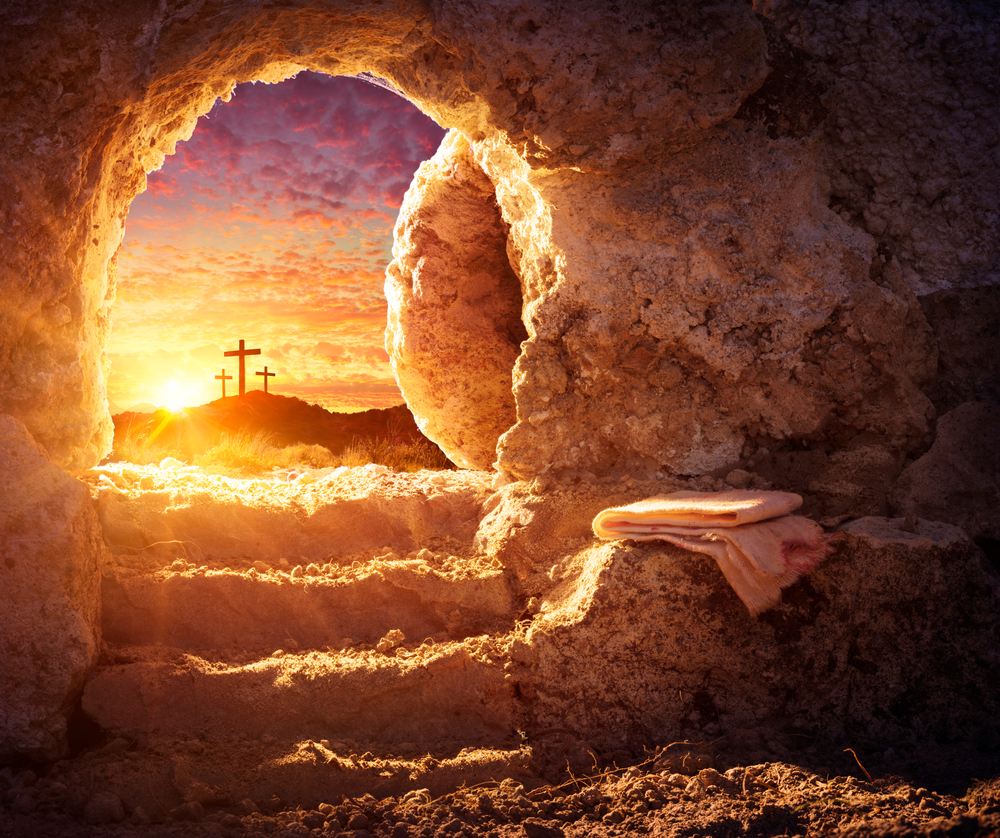
St Matthew tells us that at the crack of dawn, there was a great earthquake — the ground shook, the stone guarding the tomb rolled back, and an angel of the Lord now sat upon it.
Others in the area may well have felt the tremor, but it was the guards who experienced it firsthand at the very moment of God’s intervention.
And from that point on, the responses of those involved could not have been more different.
The Guards: Overwhelmed at the Tomb
The guards experienced the earthquake at its epicentre.
They had not, like the women, come in love or expectation; they were soldiers (probably quite young) there only under military orders.
But they must have felt the ground unexpectedly heaving beneath them, seen the stone roll back, and faced the angel in all his brilliance.
And St Matthew is quite clear, when he said: “for fear of him” the guards shook and became like dead men.
Fear overtook them so completely that their strength simply gave way.
In that moment, I would say, their bodies told them the truth before their minds could grasp it – and they yielded to a reality they could not control or comprehend.
The Women: Fear Opening into Faith
The women came in devotion and sorrow. They had likely felt the tremor, although they could not have known what it signified.
They did not expect anything extraordinary; they simply wanted to honour Jesus. But on arrival at the tomb found the stone moved and an angel waiting.
Their fear was real, yet it had not paralysed them. They listened to the angel’s message, received it and allowed fear to open into faith.
Then they ran to share the news, and in their obedience were met by the risen Christ Himself.
Their hearts were ready to receive what God revealed, even without fully understanding it.
The Leaders: Protecting Their Way of Life
The Jewish leaders may well have felt tremors of the earthquake, but they had not seen the angel or the empty tomb – and they received the report second-hand.
Their response to this was not collapse but calculation.
They weighed the implications and recognised that if the guards’ testimony was true, everything would change — their authority, their influence, their understanding of God’s work, even their place in the community.
Unwilling for their way of life to be disrupted, they chose control over truth, crafting a story and offering money to contain the revelation that threatened their power.
Revelation, and the Heart’s Response
St Matthew’s words remind us that when God reveals Himself, His light exposes not only His glory but also the disposition of those who encounter it.
The guards responded with involuntary surrender, the women with openness, but the leaders resisted the truth.
Each stood before the same truth, yet their actions revealed something different about their hearts.
This passage from Matthew’s gospel invites us to let God’s truth meet us where we are — in openness, in frailty, and in resistance — and to allow ourselves to be drawn into something new.
It reminds us that as the angel comforted the women, so too angels will comfort us – when fear prevails.
Prayer
God of light and life, who revealed the glory of the risen Christ at the empty tomb,
grant us hearts as open as the women who heard Your word,
a readiness like the guards to be moved by Your power,
and a willingness to be changed by Your truth.
Meet us in our fear, steady us in our uncertainty,
and lead us into the joy and courage of resurrection faith;
through Jesus Christ our Lord. Amen.
Find out more at a Church Near You by clicking the logo below: